NovDS

Latest Articles

Stay up to date with the latest trends in technology.

The world of user interface design is undergoing radical transformations driven by technological innovation and changing user behaviors, promising unprecedented improvements in the digital browsing experience. These modern trends are not limited to aesthetics alone but extend to encompass functionality, accessibility, and the overall user experience, shaping a more interactive and intelligent future.


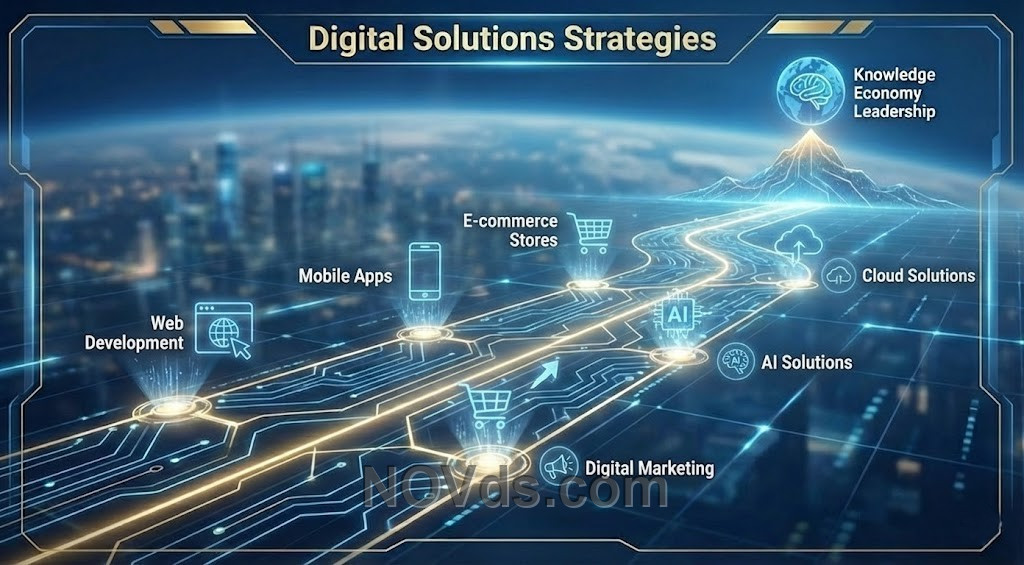
In the contemporary business world, complex applications have become the backbone of many vital operations. However, managing, maintaining, and scaling them presents a significant challenge for organizations increasingly relying on these systems to achieve their strategic goals. This is where cloud solutions emerge as a true savior, offering an incredibly flexible and scalable environment capable of accommodating the evolving demands of these dynamic applications. The cloud enables organizations to overcome the limitations of traditional infrastructure, such as the need for massive capital investments in hardware and software, and the difficulty of rapid scaling to meet demand peaks or unexpected growth. Through a pay-as-you-go model, companies can significantly reduce operational costs while ensuring the availability of necessary resources at any time with minimal administrative effort. Furthermore, cloud solutions provide high levels of security and reliability, thanks to automatic backup mechanisms and disaster recovery, in addition to continuous security updates managed by global service providers. They also foster innovation by offering advanced tools and platforms for rapid development and deployment (such as containers and serverless computing), allowing teams to focus on building features and improving user experience instead of managing complex infrastructure. Ultimately, the benefits of cloud solutions are not limited to the technical aspect; they extend to empowering companies to achieve their strategic objectives, enhance their competitiveness, and accelerate their growth in a constantly evolving and challenging digital market.

In the rapidly evolving web world, merely having a website is no longer enough for success. Optimizing website performance and speed has become an indispensable and crucial factor, not only for user experience but also for achieving advanced rankings in search engine results. This article aims to explore the intricate relationship between Search Engine Optimization (SEO) and website performance, and how investing in page load speed and quick site responsiveness can propel SEO efforts to new levels. We will discuss the importance of speed from a user's perspective, where minor delays affect bounce rates and visitor engagement, and from a search engine's perspective, which considers site speed a fundamental ranking factor. We will also cover practical strategies for performance improvement, such as image compression, using Content Delivery Networks (CDN), code optimization, and reducing server requests. Furthermore, we will highlight SEO best practices that integrate with performance optimization, such as choosing effective keywords, building high-quality backlinks, and creating valuable content. We will also provide an overview of the tools that can be used to measure performance and monitor progress. Understanding and systematically applying these aspects will help website owners and digital marketers build a superior user experience, increase visibility, and effectively achieve their digital goals.

In our contemporary world, where the pace of digital transformation is accelerating and devices and systems are interconnected via the internet, cybersecurity has become not just a technical term, but an imperative necessity to protect individuals, institutions, and nations alike. Cybersecurity refers to a set of practices, technologies, and processes designed to protect networks, systems, software, and data from digital attacks, damage, or unauthorized access. The importance of this field is growing significantly with the increasing reliance on technology in every aspect of life, from online banking transactions and e-commerce to critical infrastructure and government data management. Cyber threats are constantly evolving, including malware, phishing attacks, Distributed Denial of Service (DDoS) attacks, and data breaches that can cost companies billions of dollars and damage their reputation. Furthermore, they pose a risk to personal privacy and national security. Therefore, understanding the basics of cybersecurity and implementing best practices is no longer an option, but a duty for every internet user and every organization that handles digital data. Cybersecurity requires a multi-layered approach, combining advanced technical solutions such as encryption, firewalls, and intrusion detection systems, with continuous user awareness and the development of robust security policies. Investing in this field is not just a cost, but an investment in continuity, resilience, and trust in the digital age, ensuring a safe and reliable digital environment for everyone.

The world today is witnessing a radical transformation thanks to the Artificial Intelligence (AI) revolution, which is reshaping the core of our daily lives and major industries alike. AI, aiming to simulate human capabilities such as learning and problem-solving, is permeating every corner, from smart home devices to complex systems in healthcare, transportation, and finance. In healthcare, it contributes to early disease diagnosis and drug development, while in industry, it boosts productivity through smart robots and promises to transform the concept of transportation with self-driving cars. It also plays a crucial role in fraud detection in the financial sector and personalized education. However, this revolution is not without serious ethical challenges, such as issues of data bias, privacy and security concerns, and the potential for job displacement due to automation, in addition to matters of control and accountability. The future of AI lies not in replacing humans, but in enhancing their capabilities, which requires us to address these challenges responsibly to ensure its ethical and equitable use. It is not just a technology, but a cultural, economic, and social revolution that redefines the impossible and pushes the boundaries of human innovation towards new horizons.

Artificial Intelligence (AI) represents a profound technological revolution reshaping the foundations of our societies and economies, carrying immense potential to radically change the future of humanity. AI is no longer confined to science fiction movies; it has become an integral part of our daily lives, from voice assistants in our phones to self-driving systems and advanced medical diagnostics. Its importance lies in its ability to process and analyze vast amounts of data with speed and accuracy far exceeding human capabilities, opening new horizons for innovation in multiple fields. In healthcare, it contributes to early disease diagnosis and the development of personalized treatments. In education, it offers customized learning experiences tailored to each student's needs. Economically, it boosts productivity and efficiency and improves decision-making processes in companies. Despite these benefits, AI poses significant challenges, most notably its impact on the job market through the automation of certain roles, necessitating the retraining of the workforce and the development of new skills. It also raises ethical issues related to privacy, cybersecurity, and algorithmic bias. To ensure a prosperous future, we must deal with AI responsibly, by establishing strict legal and ethical frameworks, investing in research and development, and fostering international cooperation to maximize its potential while mitigating its risks. It is a key to a smarter and more efficient future, but it requires our constant readiness to adapt and engage in continuous learning.